AI
10 days agoNews Editor

As AI grows more powerful, the case for blockchain gets stronger

Foresight has published a commentary arguing that artificial intelligence and blockchain are likely to become increasingly interdependent, even though the two technologies are built on opposite instincts. The article says AI is oriented toward centralization and efficiency, while blockchain is designed around decentralization and accepts lower efficiency as the cost of reducing reliance on centralized trust. In that contrast, the author sees blockchain as more valuable, not less, as AI capabilities continue to expand. The piece also reviews several practical questions around AI and crypto. It says AI + Crypto applications have already appeared and some have generated real cash flow, but their scale remains small and no clear breakout model has emerged yet. On AI-driven trading, the author points to the niche of AI Agents running fully automated quantitative strategies, but says there is still no clear evidence that such products have outperformed traditional quant funds. The article also rejects consortium chains as "not real blockchains" and argues that ordinary users should approach crypto investing with caution, because while the capital threshold is low, the knowledge threshold is extremely high.

410
As AI grows more powerful, the case for blockchain gets stronger
Hudson River Trading
10 days agoNews Editor

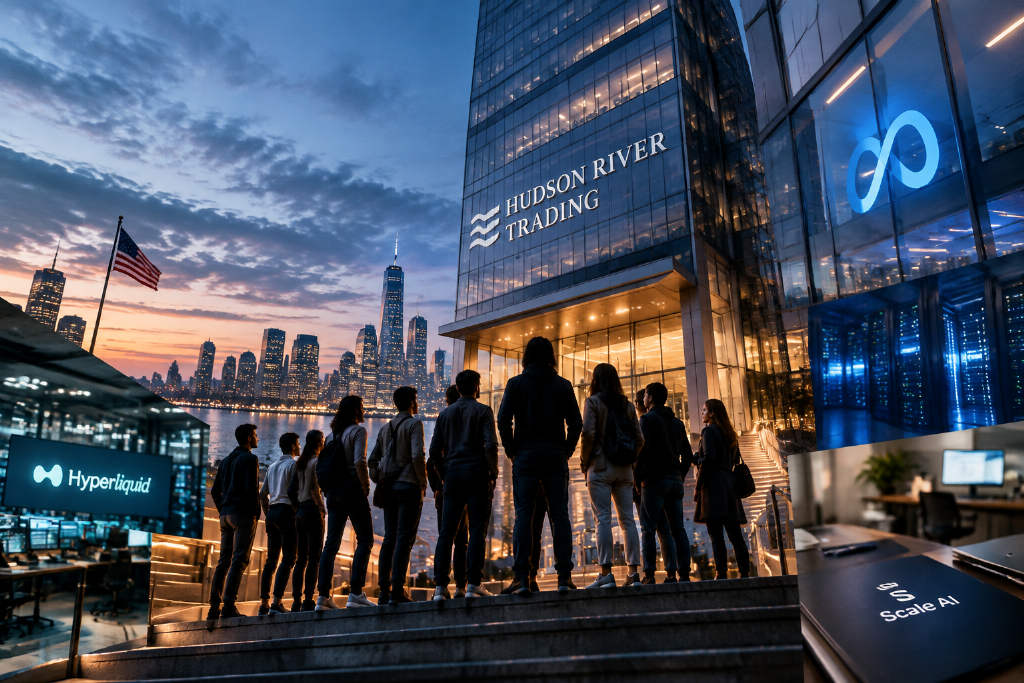
How HRT’s 2015 intern class grew into a $100 billion-plus founder network

A selfie posted by Meta Chief AI Officer Alexandr Wang has revived interest in one of the more unusual talent pipelines in tech: Hudson River Trading’s first intern class in the winter of 2015. The program took only 10 interns. A decade later, several of them have gone on to found or lead companies whose combined valuations now exceed $100 billion, according to the source article. The group includes Wang, the Scale AI founder who later joined Meta in a $14.3 billion deal tied to a 49% stake purchase; Jeff Yan, founder of decentralized exchange Hyperliquid; and Scott Wu, the Cognition CEO behind the AI coding agent Devin. The article traces how a small circle formed through Olympiad competitions and sharpened inside a quantitative trading firm later spread across AI infrastructure, crypto market structure, AI software engineering, customer service automation, search, and video generation. It also names other figures connected to the same orbit, including Jesse Zhang of Decagon, Johnny Ho of Perplexity, Demi Guo of Pika, and Steven Hao of Cognition. The core argument is not that they all built the same kind of company, but that they carried a similar way of thinking from math and programming contests into startups: identify an inefficient system, then rebuild it with algorithms and engineering.

770
How HRT’s 2015 intern class grew into a $100 billion-plus founder network
Bitcoin
27 days agoNews Editor

Trader Killa says Bitcoin could peak at $97,000 this year

Trader Killa said Bitcoin may reach a yearly high of $97,000, while spending most of the year trading below that level, according to ChainCatcher. He identified the $80,000 to $83,000 range as the key near-term zone for BTC. If that level breaks, he said the next possible area would be $74,000 to $77,000. Killa described that range as a likely final capitulation bottom before a move toward $97,000. He also said that if strength holds, the pullback could be much shallower, with Bitcoin only dipping into the low $80,000s before the next leg higher. Killa is a BTC-focused quantitative trader with more than 200,000 followers on X. ChainCatcher noted that he called the top of the current bull market in May 2025, shorted Bitcoin at $74,688 in mid-April, and switched to a long position during the broader market sell-off on June 5.

600
Trader Killa says Bitcoin could peak at $97,000 this year
Bitcoin
1 months agoNews Editor

Trader Killa says Bitcoin could target $88,000, with a short-term drop to $70,000 seen as unlikely

BlockBeats reported on Sept. 21 that trader Killa updated his Bitcoin view after a sharp move higher, saying the next upside target could reach the $88,000 area. He added that if BTC were to fall quickly back below $80,000, the price could test a low around $70,000. Still, based on his volume analysis, he said that scenario does not look likely at this stage. Killa is described as a quantitative trader focused on BTC and has more than 200,000 followers on X. According to the report, he previously called the top of the current bull market in May 2025. In mid-April, he opened a short on Bitcoin at $74,688, then switched to a long position on June 5 during a broad market decline. The latest update came in response to Bitcoin’s rapid upward move, with Killa outlining both his upside target and the downside level he would watch if momentum reverses.

830
Trader Killa says Bitcoin could target $88,000, with a short-term drop to $70,000 seen as unlikely
Bitcoin
1 months agoNews Editor

Trader Killa says BTC gained more than 5% within eight days after each of the last three U.S. CPI releases

ChainCatcher reported that trader Killa shared statistical data showing Bitcoin rose more than 5% within eight days after each of the last three U.S. Consumer Price Index releases. Killa said the market has already priced in negative news and argued that a bear trap is now in place, adding that he is watching to see whether a similar pattern appears this time. Killa is described as a quantitative trader focused on BTC. He previously called the top of the current bull cycle in May 2025 and has more than 200,000 followers on X. In mid-April, he opened a short on Bitcoin at $74,688, then switched to a long position on June 5 during a broad market decline.

1100
Trader Killa says BTC gained more than 5% within eight days after each of the last three U.S. CPI releases
Policy and Regulation
1 months agoNews Editor

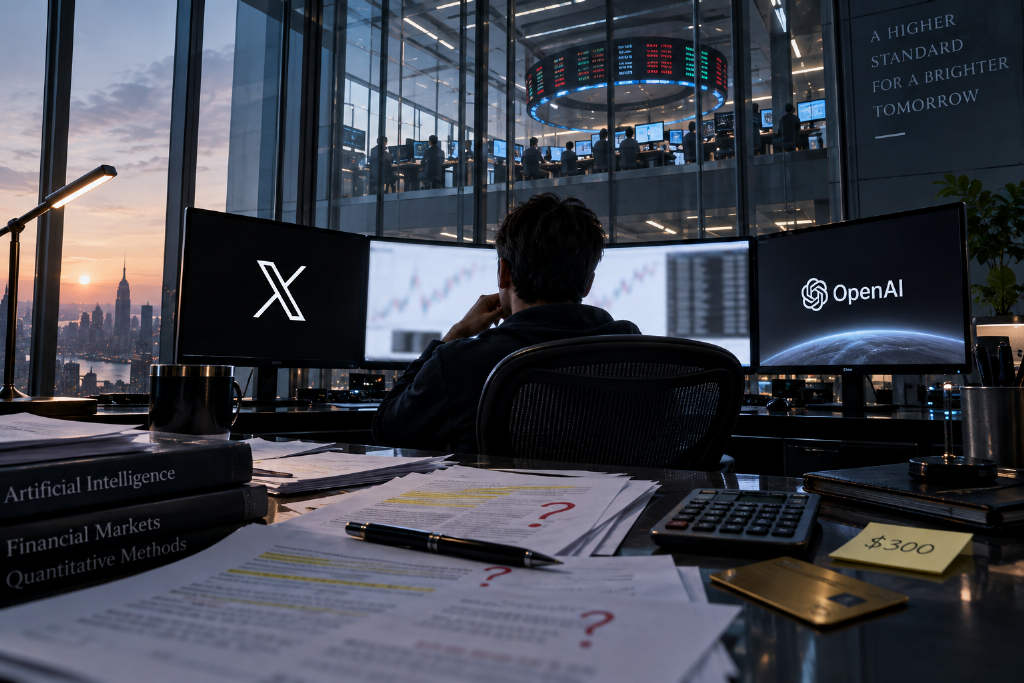
Viral X post says GPT-6 Astra can build a personal hedge fund, but paper citations and cost claims face scrutiny

A viral post on X claimed users could recreate an institutional-grade quantitative strategy factory with GPT-6 Astra for as little as $300 a month. The post, published by Roan on Sept. 8, drew 211,600 views, 846 likes and 2,100 bookmarks, framing the setup as a low-cost path to a "personal hedge fund." BlockTempo reviewed the academic references and pricing figures cited in the thread and found several mismatches. Roan divided tradable "mispricings" into four categories, including statistical arbitrage, volatility surface dislocations, factor residual returns and insider-trading signals. According to BlockTempo, the first three references broadly matched the cited papers, but the insider-trading example did not. The post attributed a 5.3% annualized alpha to a 2012 Journal of Finance paper by Lauren Cohen, Christopher Malloy and Lukasz Pomorski. BlockTempo said that figure does not appear in the paper, which instead reported 82 basis points per month, or 9.8% annualized, for a value-weighted long-short portfolio, and 180 basis points per month, or 21.6% annualized, for an equal-weighted version. The report also questioned the economics behind the thread. While the post said institutional quant infrastructure once cost $2 million to $50 million a year and can now be replicated for $300 to $500 a month, BlockTempo said those figures imply a cost reduction of about 417x to 2,083x, not the claimed 10,000x. It also flagged the thread’s statistical thresholds, especially a t-stat above 2.0 without any adjustment for multiple testing, as a central weakness in a system designed to generate and backtest many strategies continuously.

2330
Viral X post says GPT-6 Astra can build a personal hedge fund, but paper citations and cost claims face scrutiny
Minara
1 months agoNews Editor

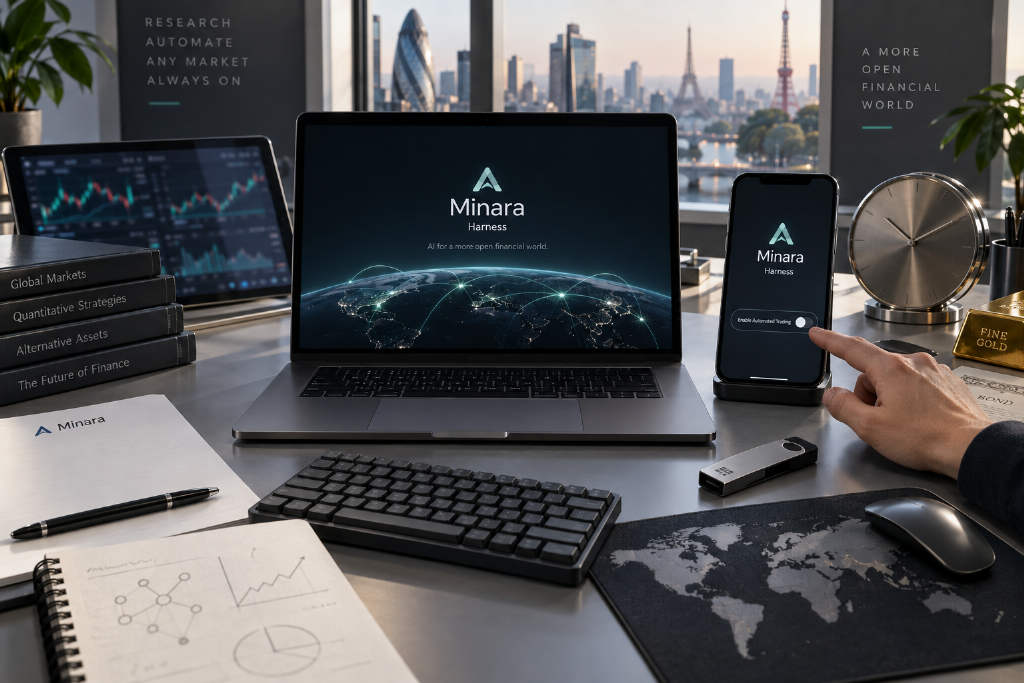
Minara launches Harness, a general financial agent for round-the-clock research and automated trading

Minara on Sept. 9 unveiled Minara Harness, a new general-purpose financial agent that the company says is now available for download worldwide. The product is designed to cover multiple asset classes, run investment research around the clock, and execute automated trades within permissions granted by users. According to the announcement, users can query financial markets in natural language, generate research reports, build quantitative strategies, and also handle routine tasks such as coding, web searches, and document work. The platform also lets users choose the underlying large language model. On the research side, Harness can call multiple specialized AI agents at the same time to examine a single investment idea from the perspectives of fundamentals, valuation, market trends, and potential risks. Users can review each agent’s information sources and differing conclusions before deciding whether to place a trade. Minara also said the system can turn natural-language trading instructions into code and run backtests. In addition, users can subscribe to other traders’ strategies and inspect their code, historical results, and live performance metrics. The company said Harness also includes an optional post-decision review mechanism and reported benchmark results showing the product outperformed OpenClaw, Hermes, and Claude Code across multiple tests.

1390
Minara launches Harness, a general financial agent for round-the-clock research and automated trading
A-share stocks
1 months agoNews Editor

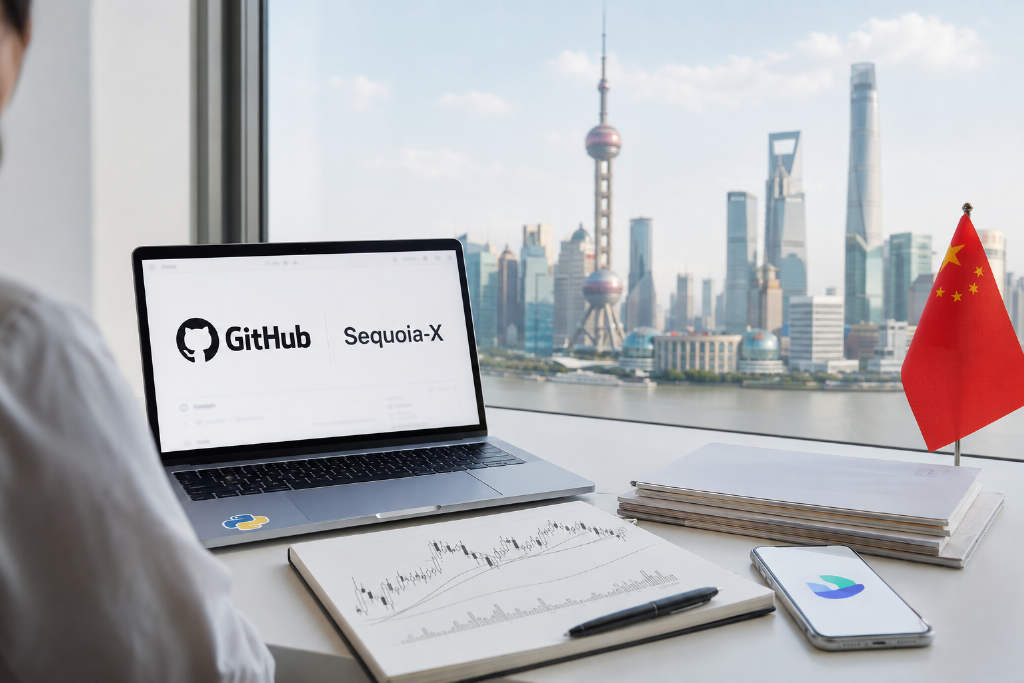
Sequoia-X draws 6,800 GitHub stars with an automated after-hours A-share stock screening pipeline

Sequoia-X, an open-source Python project built for after-hours A-share stock screening, has climbed from 3,000 to more than 6,800 GitHub stars in about six months and appeared on GitHub Trending in early September. According to a MarsBit article citing a report first published by TMTPost App, the project turns the retail workflow of reviewing charts after the market close into an unattended pipeline: it pulls daily adjusted price data through baostock, stores it locally in SQLite, runs seven built-in screening strategies across the full market, and pushes the resulting watchlists to Feishu via webhook. The report says the tool was designed to solve three problems common to retail traders in China’s A-share market: too many stocks to review manually, limited or expensive data access, and the lack of time to monitor patterns continuously during trading hours. Sequoia-X handles the process with a three-layer structure covering data, strategy execution, and notifications. Its first historical backfill takes about 12 minutes, while daily incremental updates run in roughly two to three minutes. The article also highlights the project’s engineering approach. Author YangYuDong rebuilt the tool from a V1 version that relied mainly on akshare to a V2 version based on baostock. The current release uses vectorized pandas calculations, independent Feishu bots for different strategies, and a lightweight SQLite setup. The piece closes with a caution: Sequoia-X is a screening tool, not a buy signal generator, and any strategy can go through periods of failure.

1940
Sequoia-X draws 6,800 GitHub stars with an automated after-hours A-share stock screening pipeline
Total 38 items
Go topage